
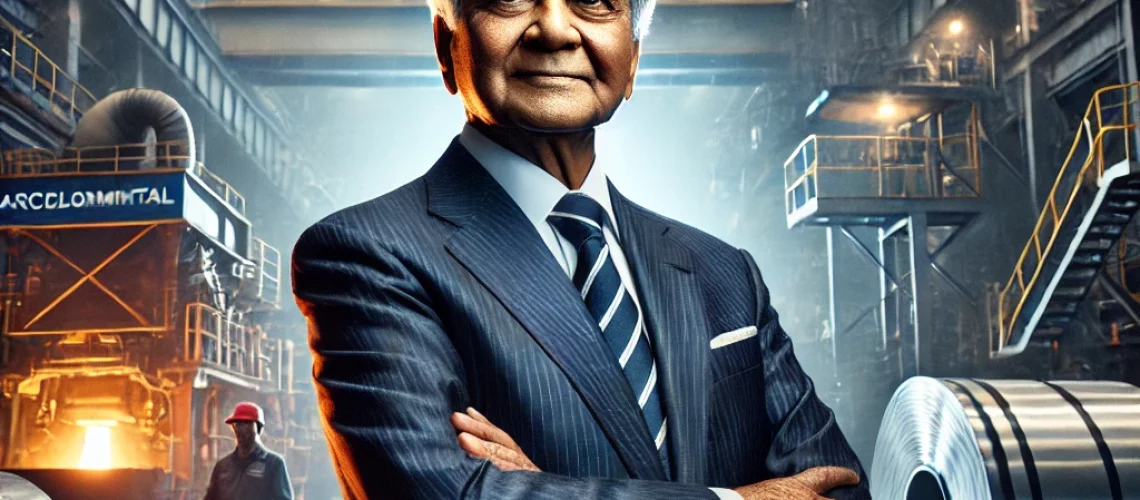

Lakshmi Mittal is a prominent figure in the global steel industry, known for his leadership as the Executive Chairman of ArcelorMittal. Under his guidance, ArcelorMittal has grown into the world’s largest steelmaking company, producing millions of tons of steel annually and serving diverse industries worldwide.
Born in Rajasthan, India, Mittal inherited a family business but expanded it through strategic acquisitions and mergers, including the major 2006 merger that formed ArcelorMittal. His ability to transform struggling steel mills into profitable ventures made him a key player in the global commodity market.
Mittal’s story reflects a combination of business acumen and strategic foresight in the steel sector. His role extends beyond ArcelorMittal, influencing industry standards and shaping the future of steel production worldwide.
Early Life and Background
Lakshmi Mittal was born in a modest family in a small town in Rajasthan, India. His upbringing and early environment shaped his understanding of business and steel production. His education and initial work experiences laid the foundation for his future industrial leadership.
Family and Upbringing
Lakshmi Mittal was born on June 15, 1950, in Sadulpur, a village in Rajasthan. He belonged to a Marwari business family known for their entrepreneurial approach. His father, Mohanlal Mittal, ran a small-scale steel company, Nippon Denro Ispat, which introduced Lakshmi to the steel business from an early age.
Growing up in a business-oriented household, Mittal was exposed to practical aspects of industry and trade. The family’s focus on steel and trade provided him with the groundwork to understand the steel market dynamics in India. This early exposure encouraged his ambition to expand beyond local boundaries.
Education
Mittal attended St. Xavier’s College in Kolkata, where he completed his graduation. His education included business and commerce, which complemented his practical knowledge of his family’s steel operations. The combination of formal education and hands-on industry experience gave him both the theoretical and applied skills needed for his future ventures.
His education did not stop with a degree; the understanding of global markets and business practices became vital as he later moved to London and expanded internationally. The balance of academic learning and business exposure was critical in shaping his strategic approach.
Initial Exposure to the Steel Industry
Lakshmi Mittal’s first professional experience came in 1976 when he took over his father’s steel business. This period was crucial as he learned the operational, financial, and market-related aspects of steel manufacturing. He focused on improving efficiency and growth, which helped the company survive and expand.
Early on, Mittal recognized the potential of steel production on a global scale. He aimed to broaden operations beyond India, setting the stage for future acquisitions and mergers. His hands-on experience managing the family business was the cornerstone for building ArcelorMittal, which would grow into the world’s largest steel producer.
Founding and Growth of Mittal Steel
Lakshmi Mittal transformed a modest family steel business into a global industrial force. His strategic vision and expansion efforts built the foundation for what became the world’s largest steel company.
Establishing Mittal Steel Company
Lakshmi Mittal launched Mittal Steel Company by building on his family’s existing steel operations in India. In the 1970s, he began expanding internationally, establishing his first major plant in Indonesia. This move marked his entry into global steel manufacturing and set the stage for further growth.
He focused on acquiring underperforming steel plants, turning them around through efficiency improvements and investment. Establishing Mittal Steel as an independent company formalized his global ambitions.
Early Business Challenges and Successes
Mittal faced significant challenges, including regional instability and fluctuating steel demand. Expanding in emerging markets required overcoming logistical and regulatory hurdles.
However, his ability to cut costs and integrate operations led to steady success. Early triumphs in Indonesia and later in other countries demonstrated his knack for managing complex industrial operations at scale.
Key Acquisitions and Expansions
A series of bold acquisitions defined Mittal’s growth strategy. In 2004, he merged his steel assets with International Steel Group, expanding his footprint in the U.S. market.
The landmark 2006 merger with Arcelor created ArcelorMittal. This deal formed the largest steel producer worldwide, employing over 200,000 people. Continuous expansion in Europe, Asia, and the Americas solidified Mittal Steel’s global dominance.
| Year | Acquisition/Expansion | Outcome |
|---|---|---|
| 1970s | Steel plant in Indonesia | First major international operation |
| 2004 | International Steel Group | Entry into U.S. steel market |
| 2006 | Merger with Arcelor | Creation of world’s largest producer |
Formation of ArcelorMittal
Lakshmi Mittal’s creation of ArcelorMittal was marked by strategic consolidation and overcoming significant industry challenges. The merger with Arcelor marked a pivotal moment, reshaping the steel industry’s landscape. This transformation had wide-reaching effects on steel markets globally.
The Merger With Arcelor
In 2006, Lakshmi Mittal led the takeover of Arcelor, then the world’s largest steel company by production. The merger combined Arcelor’s assets with Mittal Steel’s, creating ArcelorMittal, the largest steel producer worldwide.
The deal was valued at about $33 billion and united several key steel operations in Europe, Latin America, and North America. This consolidation enhanced economies of scale, expanded market reach, and strengthened the company’s global position.
Mittal gained control of nearly 40% ownership, aligning the company under his leadership as executive chairman. The merger integrated advanced technology and diversified product portfolios, boosting operational efficiency.
Overcoming Industry Resistance
The merger faced strong opposition from Arcelor’s management and some European governments concerned about job security and national interests. Mittal’s approach balanced assertive negotiation with tactical patience.
He engaged key stakeholders through transparent communication and leveraged shareholder support by tendering an attractive offer. Regulators scrutinized the deal over antitrust concerns, but eventual approvals acknowledged the merger’s market benefits.
Mittal’s ability to navigate political and cultural barriers demonstrated his strategic acumen. The eventual success of the merger set a precedent for large-scale consolidations in heavy industry.
Impact on Global Steel Markets
ArcelorMittal’s formation shifted global market dynamics by creating a dominant player with over 100 million tonnes of steel output annually. It increased competition, compelling other firms to reconsider scale and specialization.
The company’s enhanced bargaining power affected raw material pricing and supply chain logistics worldwide. It also influenced steel prices through its production capacity, affecting sectors like construction and automotive.
By centralizing expertise and resources, ArcelorMittal accelerated innovation in steelmaking processes. It set new standards for environmental and operational efficiency, further influencing global steel industry trends.
| Key Impact Areas | Description |
|---|---|
| Market Share | Became the largest steel producer globally |
| Pricing Influence | Greater control over steel and raw material prices |
| Industry Standards | Advanced efficiency and environmental practices |
| Competitive Pressure | Triggered consolidation and strategy shifts worldwide |
Lakshmi Mittal’s Leadership Style
Lakshmi Mittal leads with a focus on clear direction, operational efficiency, and global integration. His approach combines disciplined management, an emphasis on innovation, and calculated strategic decisions that have consolidated his company’s position in the steel industry.
Management Philosophy
Mittal prioritizes efficiency and cost control while maintaining a decentralized management structure. He empowers local managers to adapt to specific market conditions without excessive corporate interference. This balance allows for agility in diverse geographic regions.
He emphasizes performance metrics and accountability. Mittal’s leadership insists on meeting targets with precision, driving continuous improvement across all operations. His style fosters responsibility and discipline throughout the company hierarchy.
Employee engagement is also important. Mittal promotes open communication channels within the organization, encouraging feedback and collaboration to enhance productivity and align teams with company goals.
Approach to Innovation
Mittal views innovation primarily as a means to improve operational processes and sustainability. He supports investments in advanced technologies that reduce costs and environmental impact.
He encourages the adoption of new steel-making techniques and continuous modernization of plants. This focus enables ArcelorMittal to maintain competitive advantages in quality and efficiency.
Research and development under his leadership often target energy efficiency and resource optimization. This pragmatic approach helps balance business growth with environmental responsibilities, reflecting his long-term vision for the industry.
Strategic Decision-Making
Mittal’s strategic decisions emphasize global consolidation and market leadership. He has engineered multiple mergers and acquisitions to create economies of scale and expand ArcelorMittal’s worldwide footprint.
His decision-making process is data-driven, supported by detailed market analysis and financial rigor. Mittal weighs risks carefully, favoring sustainable growth over short-term gains.
He also adapts strategies based on shifting global economic conditions and steel demand patterns. This flexibility has been critical in navigating industry downturns and emerging competitive challenges.
ArcelorMittal: The World’s Largest Steelmaker
ArcelorMittal operates at a massive scale, serving diverse markets with a broad steel product range. The company integrates global operations with a strong focus on innovation and environmental responsibility.
Global Operations and Presence
ArcelorMittal has production facilities and commercial offices across more than 60 countries. Its main steel plants are located in Europe, the Americas, Asia, and Africa, ensuring a strategic presence near key industrial hubs.
The company employs around 190,000 people worldwide. Its extensive logistics network supports rapid delivery to customers in sectors like automotive, construction, and appliances.
This global footprint enables ArcelorMittal to adapt to regional market needs while maintaining operational efficiency and supply chain resilience.
Major Products and Markets
ArcelorMittal manufactures a wide range of steel products, including flat carbon steel, long steel, and tubular products. These cater to industries such as automotive, construction, appliances, energy, and packaging.
Key markets include Europe, North America, and Asia, where demand is driven by infrastructure projects and manufacturing activities. The company also provides specialized steel grades for automotive safety and energy sector applications.
Its product diversity helps balance cyclical demand fluctuations and supports long-term customer partnerships in multiple industries.
Sustainability Initiatives
ArcelorMittal emphasizes reducing carbon emissions and increasing energy efficiency. It aims to achieve carbon neutrality in European steelmaking by 2050.
The company invests in innovative technologies like hydrogen-based steel production and carbon capture. It also pursues circular economy principles, including recycling steel scrap to lower environmental impact.
Environmental targets include reducing CO2 emissions intensity and increasing the use of renewable energy in operations. Transparency is maintained through regular sustainability reporting.
Technological Advancements in Steelmaking
ArcelorMittal incorporates advanced automation, data analytics, and AI to optimize production quality and efficiency. Its research centers develop new steel grades with enhanced strength and corrosion resistance.
The company is a frontrunner in adopting hydrogen as a replacement for coal in steelmaking, aiming to reduce carbon emissions significantly. It also explores 3D printing and digital twin technology for process innovation.
Continuous investment in R&D supports ArcelorMittal’s competitiveness and responsiveness to evolving market demands.
Role as Executive Chairman
Lakshmi Mittal oversees ArcelorMittal’s global operations with a focus on strategic direction, governance, and long-term growth. His role involves steering the company in a competitive industry while maintaining strong connections with shareholders, employees, and partners. He balances corporate governance with innovation and industry challenges.
Corporate Governance Responsibilities
As Executive Chairman, Mittal holds primary responsibility for guiding ArcelorMittal’s board and ensuring effective governance practices. He leads board meetings, oversees compliance with regulations, and shapes corporate policies that align with shareholder interests.
Mittal ensures transparency in decision-making and accountability across multiple regions where ArcelorMittal operates. His oversight extends to risk management, corporate ethics, and the integration of sustainability goals within governance frameworks.
This role requires balancing the interests of various stakeholders while setting clear standards for operational and financial performance. Under his leadership, the board adapts to evolving market conditions and regulatory environments.
Vision for the Future
Mittal’s vision focuses on maintaining ArcelorMittal as the world’s top steel producer through technological innovation and expansion into emerging markets. He prioritizes investments in sustainable steel production methods to reduce environmental impact.
He encourages the adoption of new technologies such as digitalization and automation to improve efficiency and product quality. The strategy includes expanding capacity while diversifying into related sectors like mining.
His forward-looking approach anticipates shifts in global steel demand, emphasizing resilience and adaptability in supply chains. Strengthening ArcelorMittal’s position globally is central to his long-term planning.
Relationship With Stakeholders
Maintaining strong relationships with shareholders, customers, governments, and employees is a key focus for Mittal as Executive Chairman. He fosters open communication to build trust and secure ongoing support.
Mittal actively engages with major institutional investors and advises on strategic decisions impacting shareholder value. His role includes collaboration with governments to navigate regulatory complexities in multiple countries.
By promoting employee welfare and safety, he ensures workforce commitment and operational stability. His leadership style values feedback and partnership, recognizing the importance of stakeholder alignment for sustained success.
Significant Achievements and Awards
Lakshmi Mittal has transformed the global steel industry through strategic business decisions, earning recognition from industry peers and contributing to social causes. His achievements reflect both his leadership in expanding ArcelorMittal and his broader impact beyond steel production.
Major Business Milestones
Mittal led the merger of Mittal Steel with Arcelor in 2006, creating ArcelorMittal, the world’s largest steelmaker by output and revenue. This strategic move consolidated the fragmented steel industry on a global scale.
Under his leadership, the company achieved revenues surpassing $80 billion. He successfully acquired and turned around several struggling steel mills worldwide, enhancing operational efficiency.
Mittal also played key roles in related companies, including chairmanship of Aperam and board membership at Goldman Sachs, influencing both steel and finance sectors.
Industry Recognitions
Lakshmi Mittal has received several prestigious awards for his contributions to steel and business. Notably, he was honored with the Padma Vibhushan, one of India’s highest civilian awards.
He is recognized internationally for restructuring the steel industry into a more consolidated and globalized model. His leadership has set benchmarks in mergers, acquisitions, and operational excellence.
Mittal’s role as an industry icon is reinforced by frequent participation in advisory councils and global economic forums, reflecting his influence on industrial policies and business practices worldwide.
Philanthropic Contributions
Beyond business, Mittal actively supports education and child health initiatives. He has funded numerous projects aimed at improving access to quality education in India and internationally.
His philanthropy extends to sponsoring hospitals and health programs focused on children, demonstrating his commitment to social welfare.
Through the Lakshmi Niwas Mittal Foundation, he supports scholarships and infrastructure development in educational institutions, aligning his legacy with sustainable growth beyond business interests.
Challenges and Controversies
Lakshmi Mittal has led ArcelorMittal through complex challenges including volatile markets, labor disputes, and scrutiny over environmental practices. These issues have shaped the company’s operations and response strategies.
Market Fluctuations and Economic Downturns
The steel industry is highly cyclical, making ArcelorMittal vulnerable to global economic shifts. During recessions or slowdowns, steel demand and prices dropped sharply, impacting revenue.
Mittal navigated multiple downturns by restructuring debt, cutting costs, and consolidating assets. The 2008 financial crisis was a significant challenge, forcing ArcelorMittal to halt expansion temporarily.
Fluctuations in raw material prices and competition from low-cost producers in China and elsewhere have added pressure. Mittal’s strategy emphasized diversification of markets and continued acquisition to maintain global leadership despite instability.
Labor and Social Issues
Labor relations have been a recurring challenge for ArcelorMittal under Mittal’s leadership. Strikes and disputes over wages occurred in various production sites worldwide, notably in Europe and India.
Critics have raised concerns about working conditions and layoffs during restructuring phases. Mittal’s approach focused on balancing cost efficiency with maintaining workforce stability, though tensions sometimes escalated.
Social responsibility programs have been implemented, but some communities impacted by plant closures and downsizing expressed dissatisfaction. The company often faced the difficult task of aligning operational demands with social expectations.
Regulatory and Environmental Criticisms
ArcelorMittal has frequently faced scrutiny for environmental impact, given steel production’s carbon intensity. Regulators pressed the company to reduce emissions and comply with increasingly strict environmental laws.
Mittal invested in technologies aimed at sustainability, including energy efficiency and reducing pollutants. However, environmental groups have criticized the pace of change and the company’s role in global emissions.
Regulatory challenges also include compliance with trade policies and tariffs, affecting international operations. Mittal’s leadership required constant adaptation to complex regulatory environments across multiple countries.
Legacy and Influence
Lakshmi Mittal’s work transformed not only the steel industry but also the companies he led and the economies they operate in. His leadership style and strategic decisions have left lasting marks on industry practices and talent development.
Impact on the Global Steel Industry
Mittal is recognized for consolidating a fragmented steel industry into a global powerhouse. Under his guidance, ArcelorMittal grew to become the world’s largest steel producer, shaping market dynamics and competition.
He championed innovations such as integrating sustainable practices and pushing the development of green steel. This focus supports the industry’s shift toward environmental responsibility while maintaining output. His foresight positioned ArcelorMittal as a leader in both scale and sustainability.
Mentoring Future Leaders
Mittal has played a key role in nurturing leadership within his enterprises. He appointed his son, Aditya Mittal, as CEO, entrusting him with daily operations while continuing as Executive Chairman.
This transition reflects Mittal’s commitment to continuity and adapting to new challenges like decarbonization. By mentoring emerging executives, he ensures the company remains agile and forward-looking without losing strategic direction.
Contribution to Economic Development
Mittal’s enterprises have contributed significantly to infrastructure and economic growth globally. Through steel production, his companies support construction, manufacturing, and transportation sectors vital for development.
His investments and business expansion created numerous jobs and economic opportunities in diverse regions. Additionally, the focus on recyclable steel aligns with sustainable economic models, reinforcing his role in shaping modern industrial development.
Personal Life and Values
Lakshmi Mittal’s life outside business reflects his deep family connections, Indian cultural roots, and a pragmatic philosophy guiding both his professional and philanthropic activities. His values shape his approach to leadership and social responsibility.
Family and Private Endeavors
Mittal was born into a Marwari Agarwal family in Rajasthan and maintains close ties to his heritage through family relationships. He is married and has children, who have also taken roles connected to the family business.
His family lives primarily in the UK but retains strong links to India. Mittal’s private life is characterized by a preference for privacy and discretion, avoiding public scrutiny beyond his corporate responsibilities.
Philanthropy is a significant private endeavor, with contributions focused on education and child health, areas he considers crucial for societal progress.
Cultural Heritage
Mittal’s upbringing in Rajasthan, within a Marwari business community, deeply influences his values on entrepreneurship and resilience. The joint family system he grew up in fostered a sense of cooperation and responsibility.
He has expressed pride in his Indian roots, often highlighting the discipline and determination these values instilled. His cross-cultural experience combines traditional Indian business ethics with a global outlook.
This cultural background informs not only his leadership style but also his engagement with both Eastern and Western business environments.
Personal Philosophy
Mittal approaches business with a strong emphasis on efficiency, strategic acquisitions, and long-term growth. He believes in adapting to market conditions while maintaining operational discipline.
His philosophy extends to corporate social responsibility, where he advocates for sustainable practices and community support. Education and healthcare philanthropy reflect his belief in empowering individuals for broader economic development.
He values humility despite his global success, focusing on hard work and steady progress rather than ostentation.